
The Myth of the Paperless Office: We Just Moved the Mess Online
For decades, futurists and tech enthusiasts have promised us the “paperless office.” The vision was clear: sleek, minimalist workstations, an end to bulky filing cabinets, and a significant reduction in our environmental footprint. We were told that digital transformation would streamline our workflows and clear our physical desks once and for all.
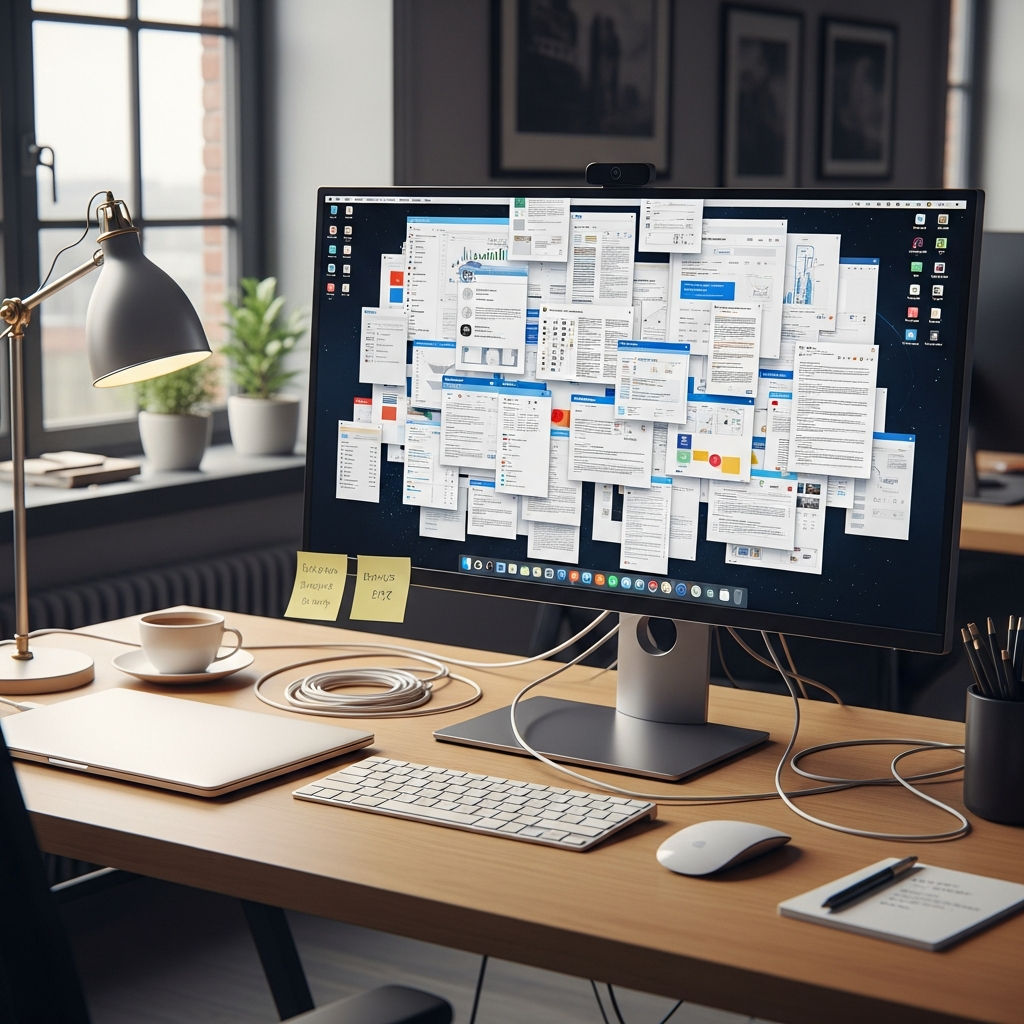
Fast forward to the present day, and while the stacks of manila folders have largely disappeared, the clutter has not. Instead, we have simply migrated the mess from our physical desks to our hard drives, cloud storage, and communication platforms. The paperless office is, in many ways, a myth. We haven’t eliminated the chaos; we’ve just made it invisible to the naked eye.
The Failed Promise of the 1970s
The term “paperless office” was first popularized in a 1975 BusinessWeek article. At the time, the advent of personal computers led experts to believe that within a decade, paper would be obsolete. However, the opposite happened. The introduction of the office printer and the photocopy machine actually caused paper consumption to skyrocket. It became easier than ever to produce, distribute, and store physical documents.
While we finally see a decline in physical paper use today, the “mess” has evolved. The psychological weight of a cluttered desk has been replaced by the cognitive load of a cluttered digital environment. We are now grappling with “digital hoarding,” a phenomenon where the ease of storage encourages us to keep everything, regardless of its value.
Digital Hoarding: The New Filing Cabinet
In the physical world, space is a constraint. When a filing cabinet is full, you are forced to purge old documents or buy more expensive floor space. In the digital world, storage is perceived as infinite and cheap. This has led to a dangerous habit: keeping every version of every file “just in case.”
- Version Control Nightmares: We have all seen files named “Project_Proposal_Final,” “Project_Proposal_Final_v2,” and “Project_Proposal_FINAL_Actual_Use_This_One.” This digital redundancy creates confusion and leads to costly mistakes.
- The Desktop Graveyard: For many, the computer desktop has become the digital equivalent of a “junk drawer,” covered in icons for screenshots, downloads, and temporary files that are never deleted.
- Email Overload: The average office worker receives over 120 emails per day. Without a strict filing system, the inbox becomes a bottomless pit of unorganized information.
The Search Paradox: Why We Can’t Find Anything
The primary argument for the paperless office was searchability. Proponents argued that instead of manually flipping through files, we could simply type a keyword and find exactly what we needed. However, the sheer volume of digital data has created a search paradox.
When you have 50,000 files spread across Google Drive, Dropbox, Slack, and local hard drives, search functions often return hundreds of irrelevant results. Studies suggest that the average knowledge worker spends nearly 20% of their workweek—one full day—just looking for internal information. We have traded the physical act of “filing” for the digital exhaustion of “searching.”
The “Ghost” Environmental Impact
One of the strongest selling points of the paperless office was its perceived environmental benefit. “Save a tree, don’t print this email” became a common footer in the 2000s. While reducing paper use is undoubtedly positive for forests, the digital alternative is not “green” by default.
Digital clutter requires energy. Every redundant file stored in the cloud resides on a physical server in a massive data center. These centers require immense amounts of electricity for power and cooling. According to some estimates, the global carbon footprint of our digital habits—from data storage to video streaming—is now equivalent to the aviation industry. Moving the mess online didn’t eliminate the environmental cost; it just shifted it to a different part of the ecosystem.
The Mental Toll of Digital Chaos
Physical clutter is known to increase cortisol levels and decrease focus. Digital clutter has a similar, albeit more insidious, effect. When you open your laptop and are greeted by 40 open browser tabs and a cluttered desktop, your brain registers it as unfinished business. This contributes to “technostress” and burnout.
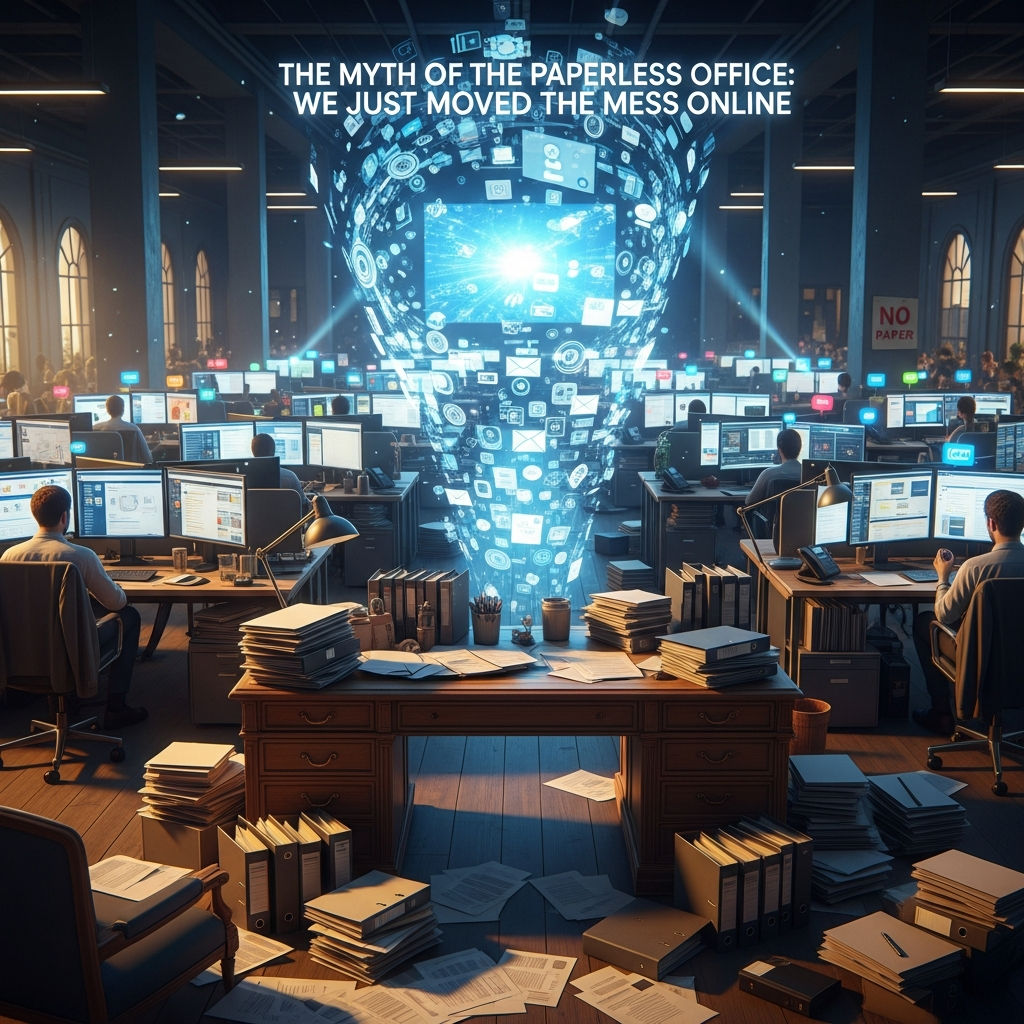
Unlike a physical mess that you can walk away from at the end of the day, the digital mess follows you home on your smartphone. The “always-on” nature of modern work means that the unorganized Slack channels and the mountain of unread emails are constantly vying for your attention, preventing true cognitive rest.
How to Reclaim Your Digital Workspace
If we are to move past the myth of the paperless office and actually achieve a streamlined workflow, we must treat our digital spaces with the same rigor we would apply to a physical workshop. Here are strategies to organize the online mess:
1. Implement a Unified Naming Convention
Consistency is the enemy of chaos. Establish a standard for how files are named (e.g., YYYY-MM-DD_Client_Project_Type). This ensures that files are chronologically organized and easily searchable without having to open them to see what they are.
2. The “Single Source of Truth” Strategy
Decide where specific types of information live. If your team uses Notion for project management, don’t keep project notes in Google Docs and Slack threads. Centralizing information reduces the “search paradox” and ensures everyone is looking at the most current data.
3. Practice Digital Minimization
Adopt a “delete-first” mentality. At the end of a project, archive the essential documents and delete the intermediary drafts and screenshots. Schedule a “Digital Spring Cleaning” once a month to purge your downloads folder and unsubscribe from irrelevant newsletters.
4. Manage Notifications, Not Files
Part of the online mess is the constant stream of communication. Use “Do Not Disturb” modes and batch-process your emails. A clean digital office isn’t just about how files are stored; it’s about how information is allowed to interrupt your focus.
Conclusion: From Paperless to Purposeful
The paperless office was never really about the paper; it was about efficiency, clarity, and productivity. By focusing solely on removing physical objects, we missed the underlying problem: our habits of information consumption and storage.
We haven’t reached the paperless utopia because we simply swapped one type of clutter for another. To truly realize the benefits of a digital workspace, we must move beyond the myth. It is time to stop hoarding data and start managing it with intention. Only when we organize the digital mess can we finally enjoy the streamlined, high-performance work environment we were promised fifty years ago.